
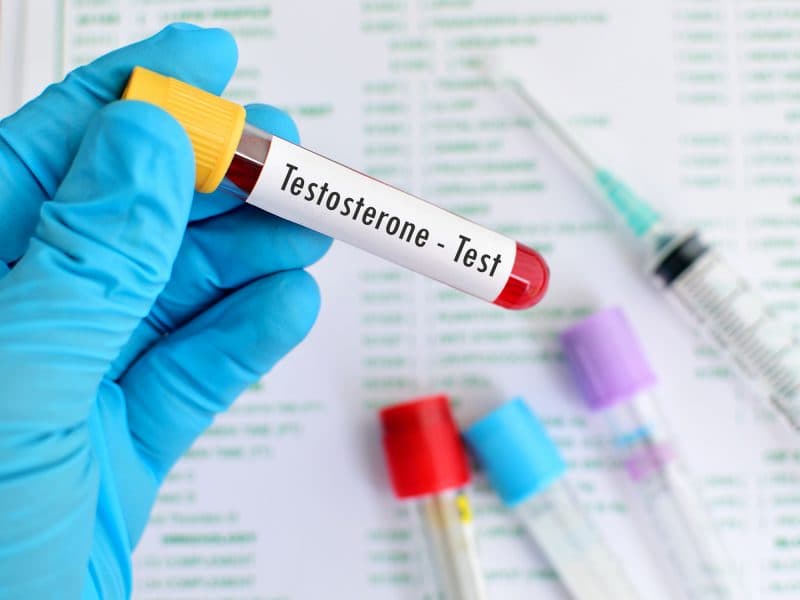
Do testosterone boosters work? Mostly no, sometimes a little, and the safety question matters too.
Patients ask about over-the-counter testosterone boosters constantly. It’s understandable — the symptoms of low testosterone are real, the supplement-aisle products promise to address them without a prescription, and the marketing leans heavily on the word “natural.” What the published literature shows about whether these products actually work, and whether they’re safe, is a more complicated picture than the back-of-the-bottle copy suggests. This post walks through the evidence.
Why the category exists in the first place
The answer is straightforward. Roughly 88% of testosterone-deficient men with healthcare coverage do not receive testosterone therapy (Hall et al., 2008 — Treatment of symptomatic androgen deficiency, Archives of Internal Medicine). That’s a large untreated population with a real clinical problem — fatigue, low libido, mood, body-composition changes, the full picture covered in the symptoms men over 40 actually report. Supplement companies built an industry around that gap, marketing “natural” herbal blends as a supposedly safer alternative to prescription testosterone.
The marketing positioning is consistent: if the supplement is plant-derived, it’s natural; if it’s natural, it must be safer than prescription medicine. That inference doesn’t hold up. Cyanide is derived from natural substances. So is botulinum toxin. “Natural” is a sourcing claim, not a safety claim — and it’s especially misleading in a product category that, by U.S. law, isn’t pre-market reviewed by the FDA the way prescription medications are.
What the safety literature actually says
A quick scan of the published literature on testosterone-boosting supplements turns up case reports of adverse events that don’t show up in the marketing copy. The documented case reports include bilateral pulmonary emboli secondary to a T-enhancing herbal supplement (Nguyen et al., 2017 — Pulmonary Embolism Secondary to Testosterone-Enhancing Herbal Supplement Use, Cureus) and elevations in liver function tests in men taking certain isoflavone-containing products (Engelhardt & Reidl, 2008 — Effects of one-year treatment with isoflavone extract from red clover, Urology). Logically: if a supplement is actually working pharmacologically the way prescription testosterone does, the side-effect profile shouldn’t be that different from prescription testosterone either. If supplement companies want credit for the upside, they have to own the downside.
Do they raise testosterone? What the ingredient reviews show
Two reviews are worth knowing about. The first looked at the top 50 testosterone-boosting supplements available on Google and analyzed the 109 total ingredients listed across those bottles. The results, in plain numbers (Clemensha et al., 2020 — “Testosterone Boosting” Supplements Composition and Claims Are not Supported by the Academic Literature, World Journal of Men’s Health):
- 24.8% of ingredients had published data showing a testosterone increase
- 10.1% had data showing a testosterone decrease with supplementation
- 61.5% had no published data on testosterone effect at all
- Only 7 herbs in the entire 109-ingredient pool had any non-conflicting published evidence of raising testosterone
The reviewers’ bottom line: most of what gets listed on a testosterone-booster label doesn’t have the published evidence to support the claim on the front of the bottle.
The second review looked at the few ingredients that do have some evidence (Santos et al., 2019 — Beyond tribulus (Tribulus terrestris L.): The effects of phytotherapies on testosterone, sperm and prostate parameters, Journal of Ethnopharmacology). The findings are useful for separating the marketing from the reality:
- Tribulus terrestris and maca (Lepidium meyenii) — two of the most heavily-marketed ingredients in the category — were NOT scientifically supported as raising testosterone in men.
- Fenugreek seed extract, mucuna seed powder, and ashwagandha root powder — at high doses — did show some scientific evidence of raising testosterone.
- But the size of the effect matters.The testosterone elevations measured weren’t large enough to influence body composition or athletic performance. The reviewers noted these ingredients work better as fertility agents than as testosterone-raising agents. Useful for couples trying to conceive; not useful for the “more energy, more muscle, more libido” marketing arc.
The contamination question
Supplements aren’t pre-market regulated by the FDA. That regulatory gap creates an opening: third-party analyses of athletic and cosmetic-enhancement supplements have documented contamination with actual anabolic-androgenic steroids (AAS) at rates as high as 15% (Parr et al., 2010 — Sports-related issues and biochemistry of natural and synthetic anabolic substances, Endocrinology and Metabolism Clinics of North America). The user doesn’t know — and the label doesn’t say — that what’s in the bottle is anything other than the herbal blend listed.
The practical read for patients: when an over-the-counter T-booster appears to be working unusually well, the contamination question is worth asking. The only way to know for sure is the labs. Real testosterone replacement therapy, prescribed and monitored by a physician, has a known dose, a known purity profile, and a known monitoring cadence. An unregulated supplement has none of those. For men who already know they’re using anabolic-androgenic steroids — or who’ve discovered after the fact that a “supplement” was contaminated — the practice also offers anabolic steroid care (health monitoring and transition support, no prescribing).
What to do instead if the symptoms are real
If symptoms persist, the right next step is bloodwork — not the supplement aisle. The clinical definition of low testosterone is a documented low total or free testosterone reading on a morning blood draw plusa symptom set that tracks to it. Either piece without the other isn’t low T, and either way, supplements don’t substitute for the panel.
When the labs warrant treatment, testosterone replacement therapy with Dr. Castellano is the path with the published evidence and the physician oversight to back it. When the labs don’t warrant TRT, a wider panel offered through hormone support therapy often surfaces a different driver — Thyroid Dysfunction, Sleep Apnea, Insulin Resistance, etc. — that’s worth addressing on its own terms. Either way, the diagnostic process drives the answer; the supplement aisle doesn’t.
For the broader frame on hormone decline and how it fits into the full aging picture, the cornerstone post on why we age walks through the broader hormonal-decline framework that sits upstream of all of this.
Frequently asked questions
Do testosterone boosters actually work?
For most ingredients on the market, no — at least not at clinically meaningful levels. A review of the top 50 testosterone-boosting supplements found only 24.8% of the ingredients had any published evidence of raising testosterone, 10.1% had data showing they LOWERED it, and 61.5% had no testosterone-effect data at all (Clemensha et al., 2020). A separate review found that a few ingredients — high-dose fenugreek seed extract, mucuna seed powder, and ashwagandha root powder — produce a measurable but small increase in total testosterone, but the increase wasn't large enough to affect body composition or athletic performance (Santos et al., 2019).
Are testosterone boosters safe?
Supplement companies are not pre-market regulated by the FDA the way prescription medications are, and the published literature has documented adverse events in patients using over-the-counter T-boosters — case reports include bilateral pulmonary emboli and elevated liver function tests (Nguyen et al., 2017; Engelhardt & Reidl, 2008). Separately, when athletic and cosmetic supplements are analyzed in third-party labs, contamination with actual anabolic-androgenic steroids has been documented at rates as high as 15% (Parr et al., 2010). "Natural" on the label is a marketing claim, not a safety claim — cyanide and botulinum toxin are natural too.
What ingredients in testosterone boosters actually have evidence?
The Santos et al. review identified a short list of plant-derived ingredients with some published evidence of raising testosterone at high doses: fenugreek seed extract, mucuna seed powder, and ashwagandha root powder. The same review concluded that two of the most heavily-marketed ingredients — tribulus terrestris and maca (Lepidium meyenii) — were NOT scientifically supported as testosterone-raising. The bigger caveat: even where evidence exists, the testosterone increase reported wasn't large enough to drive clinical effects on body composition, strength, or athletic performance. These ingredients perform better as fertility agents than as testosterone-raising agents.
What's actually in over-the-counter testosterone supplements that the label doesn't list?
Two separate concerns the published literature has documented. First: the listed ingredients themselves are often unsupported (61.5% of ingredients in a top-50 supplement review had no published testosterone-effect data — Clemensha et al., 2020). Second: when athletic/cosmetic supplements get analyzed in third-party labs, contamination with actual anabolic-androgenic steroids has been documented at rates as high as 15% (Parr et al., 2010). A supplement that appears to be working unusually well is worth a second look — sometimes the reason is that the contents don't match the label.
What should I do instead if my testosterone is low?
Get the labs first. The clinical definition of low testosterone is a documented low total or free testosterone reading on a morning, fasted blood draw plus a symptom set that tracks to it. Either piece without the other isn't actually low T, and supplements don't substitute for the panel. If the labs warrant treatment, prescription testosterone replacement therapy (TRT) — physician-supervised, with bloodwork follow-up — is the path that actually moves the trajectory. If the labs don't warrant TRT, the wider hormone panel often surfaces a different driver (thyroid, sleep, metabolic, cortisol, vitamin D) that's worth addressing on its own terms.
Bloodwork answers the question. The supplement aisle doesn’t.
A 1-hour consult with Dr. Castellano plus focused bloodwork gives a real read on what’s driving the symptoms — testosterone or otherwise. If testosterone deficiency is the concern, the consult and labs will give us the answer. If it isn’t, you walk out knowing what actually is.
- Service page — Testosterone Replacement Therapy with Dr. Castellano.
- Low Testosterone in Men Over 40: What the Symptoms Actually Mean (and What They Don’t).
- Why We Age: The Six Theories That Converge on Inflammation.
- Service page — Hormone Support Therapy: the wider panel beyond TRT.
- Service page — Anabolic Steroid Care: health monitoring and transition support for men who use AAS.